
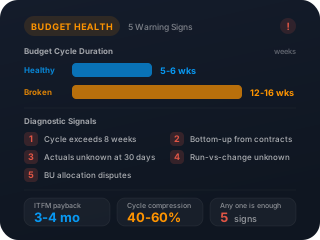
Sign #1: Your budget cycle takes longer than 8 weeks
Healthy organizations: 5–6 week process. Broken organizations: 12–16 week process.
Why it matters. At 16 weeks, you're halfway through Q2 before you've approved a budget for the fiscal year.
Root cause. Manual cost assembly, spreadsheet-based reconciliation, lack of cost allocation clarity.
5–6 weeks
Approved budget before Q1 ends. Strategic decisions inform spend; spend doesn't constrain strategy.
12–16 weeks
Budget approved halfway through Q2. Strategic capacity is gone before the year really starts.
Sign #2: Budget is built bottom-up from vendor contracts, not top-down from strategy
Healthy. Start with strategic investment priorities, then build cost model.
Broken. Start with current contracts, add growth factor, declare success.
Consequence. Cannot say no to renewal or expansion; strategy constrained by legacy contracts.
Sign #3: You cannot answer ‘what did we actually spend?’ within 30 days of month end
Healthy. Monthly close with variances explained within 30 days.
Broken. Q3 actuals aren't final until October.
Why it matters. CFO cannot see trends; mid-year corrections are firefighting, not planning.
Sign #4: Your run-vs-change ratio is unknown
Healthy. Tracked monthly; trending reported to board quarterly.
Broken. Estimated once per year; nobody knows if it's improving.
Why it matters. If you don't track investment capacity, you cannot plan strategic change.
Sign #5: Business units dispute their IT cost allocation
Healthy. <5 disputes per quarter; all resolved within weeks.
Broken. 15+ disputes per quarter; some unresolved from prior year.
Why it matters. Allocation disputes mean your cost model is not defensible.
The Fix
Invest in IT financial management platform and data integration. 3–4 month payback through budget cycle compression alone. A broken budget process is the most expensive process in the organization, because it constrains everything downstream.
“A broken budget process is the most expensive process in the organization, because it constrains everything downstream.”
— FogLifter® analysis