
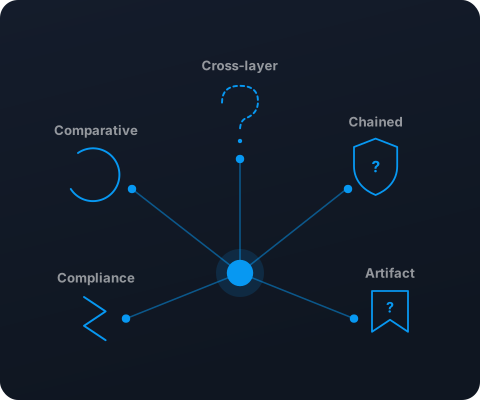
"What was our total cloud spend last month," answered instantly with a tidy chart. Nobody needs AI for that; the number is already on a dashboard. Each real pattern below makes a specific demand on the Technology Business Management (TBM) data underneath.
Five Patterns, Five Demands
- Comparative, time-based questions. "What's driving the increase in our Database & Middleware costs this quarter versus last?" requires sub-tower data that is accurate at two points in time and categorized identically at both, with enough granularity to isolate what changed. A mid-period recategorization silently corrupts the comparison, and nothing in the answer will say so.
- Cross-layer questions. "Which applications consume the most Compute relative to their cost to run?" crosses from Resource Towers into the Solutions layer, and the mapping between them is the most common blind spot in AI readiness. Organizations validate their towers carefully, because that is where the CMDB and billing data live, while the tower-to-Solutions mapping was built once at implementation and rarely revisited. A CIO does not think in towers; they think in the applications the business runs on. This is precisely the layer executive questions will hit.
- Chained questions. Real sessions are conversational. One sequence from a FogLifter® working session: show me the servers this team manages; which data centers are they in; where should we consolidate them, considering cost, available rack space, and power capacity. Each follow-up inherits context from the last, and the final question is not a lookup but a recommendation, which demands an ontology holding relationships, capacity, and cost together. Chains are also where practitioners find the most value, because they replicate the analyst back-and-forth that used to take days.
- Compliance and operational questions. Once operational data flows in alongside cost data, the questions follow it. Patch currency is the canonical example: in one enterprise environment running patch compliance at 98.7 to 99.1 percent across more than 55,000 servers, "which servers are behind on this month's patches" is exactly the kind of question that pulls Caliber-grade performance data rather than cost data. Early usage suggests the compliance queries may end up more heavily used than the financial ones.
- Questions that become artifacts. The best real queries do not end as answers. In FogLifter® NLQ, a query can be turned into a live, tunable artifact: a standing view that keeps answering as the data refreshes. The pattern this enables is quietly powerful. This quarter's ad hoc question becomes next quarter's dashboard, with no BI ticket in between.
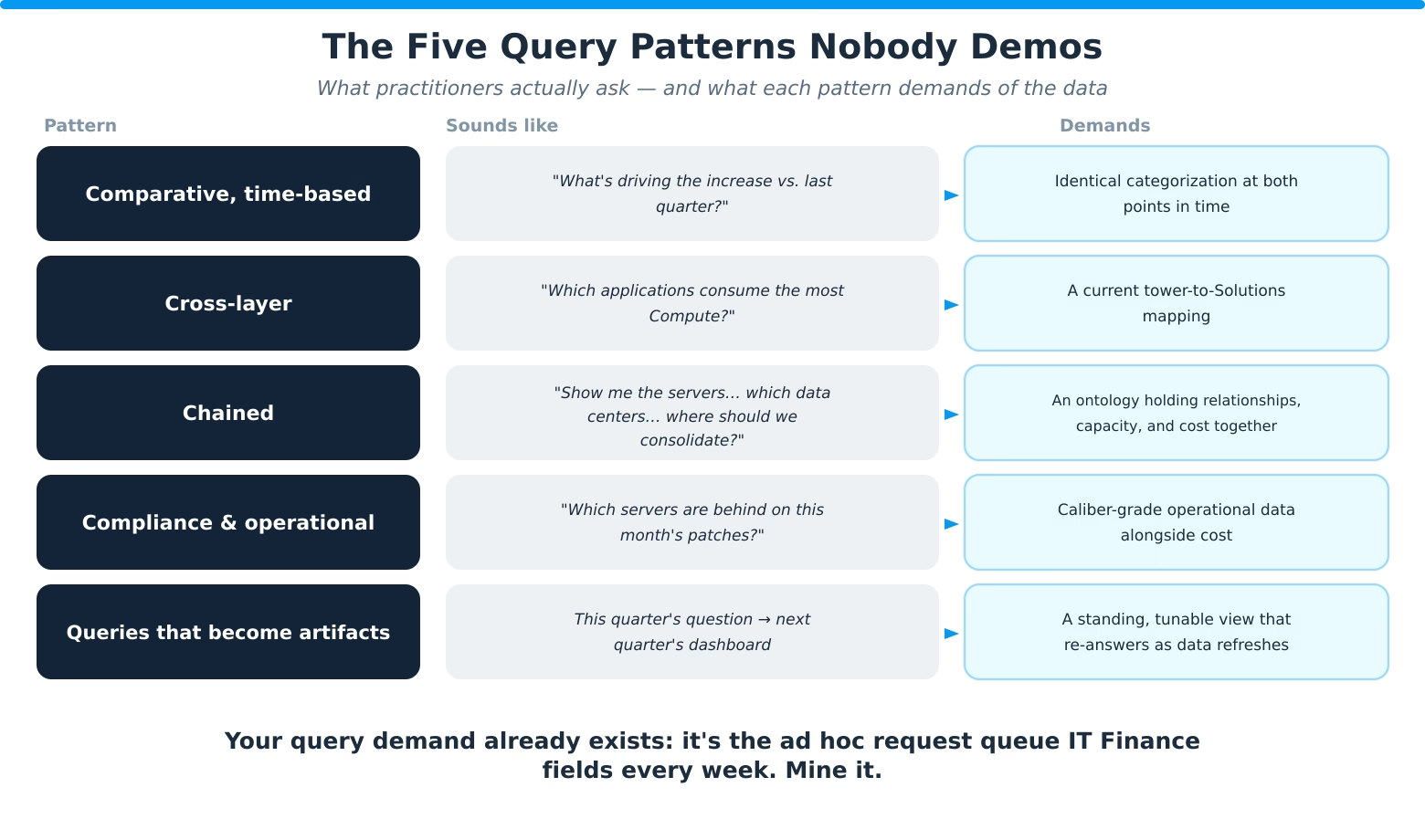
The demo questions will take care of themselves. It is these five patterns your data has to survive, and the scoping methodology for getting there is laid out in the AI Readiness Assessment whitepaper.
The whitepaper behind this blog
For a deeper look at the validation framework and a step-by-step pre-launch checklist, read the full whitepaper: The AI Readiness Assessment for TBM Programs.
Frequently Asked Questions
Chained, cross-layer questions. A sequence that inherits context and ends in a comparison or recommendation touches Resource Tower consistency, Solutions mapping, and often Consumer data in a single answer, so an error at any layer surfaces with no indication of where it originated.
Because a validated data foundation carries operational (Caliber) data alongside cost data, and questions follow the data. Patch currency, end-of-life exposure, and backup coverage queries deliver immediate operational value, and they build trust in the same foundation that answers the financial questions.
Instead of producing a one-time answer, the query is saved as a standing, tunable view that re-answers as data refreshes, letting practitioners build durable reporting through conversation rather than through a BI development cycle.
Related Resources
Continue reading on connected topics from FogLifter®.