

Readiness genuinely varies by layer of the TBM Taxonomy, and a program can be excellent at one layer and exposed at another. So rather than another argument about why readiness matters, here is a diagnostic you can actually run this week: one readiness question, one failure signature, and one roughly one-hour test for each of the four layers. By the end you will have a map, not a mood.
Four Layers, Four Readiness Questions
- Cost Pools: the completeness test. The question: does every dollar have a defensible home? Pull the last 90 days of spend and measure what percentage sits in catch-all categories such as "Other Software," "Miscellaneous Services," or an unmapped cost center left over from a reorg. In most enterprise programs the honest number lands between 3 and 8 percent. The failure signature once NLQ arrives: the tool allocates that parked spend using whatever default rule applies and reports the result with the same precision as the clean 92 percent. If the catch-all share exceeds roughly 2 percent in a pool your executives actually ask about, mark this layer amber.
- Resource Towers: the consistency test. The question: does a tower mean the same thing in every system that feeds it? Pick one tower (Compute is usually the most instructive) and pull the asset count from your CMDB, your cloud billing feed, and your ITAM platform on the same day. You are not looking for perfection; you are measuring the spread. A gap of a few percent is normal operational drift. A double-digit spread means the denominator under every unit cost built on that tower is unreliable, and no downstream layer can repair it. This is the layer that fails first in most programs, because it aggregates the most source systems with the least native reconciliation.
- Solutions: the traceability test. The question: can you connect a service to the towers and pools that support it without archaeology? Choose a mid-tier application (deliberately not one of the flagship systems your CIO reviews personally) and time how long it takes to produce its full cost picture. If the answer requires stitching three reports and a phone call, that is the answer an NLQ tool will be guessing at. Flagship applications are usually fine; the long tail is where cross-layer questions go to die.
- Consumers: the defensibility test. The question: does your showback survive contact with the person being charged? Take the single most disputed line from last quarter's showback or chargeback and trace it back to source data. If the trace runs through validated feeds, the layer is ready. If it runs through one analyst's institutional memory of which numbers to trust, it is not — and that analyst will not be in the room when a business unit leader queries the data directly.
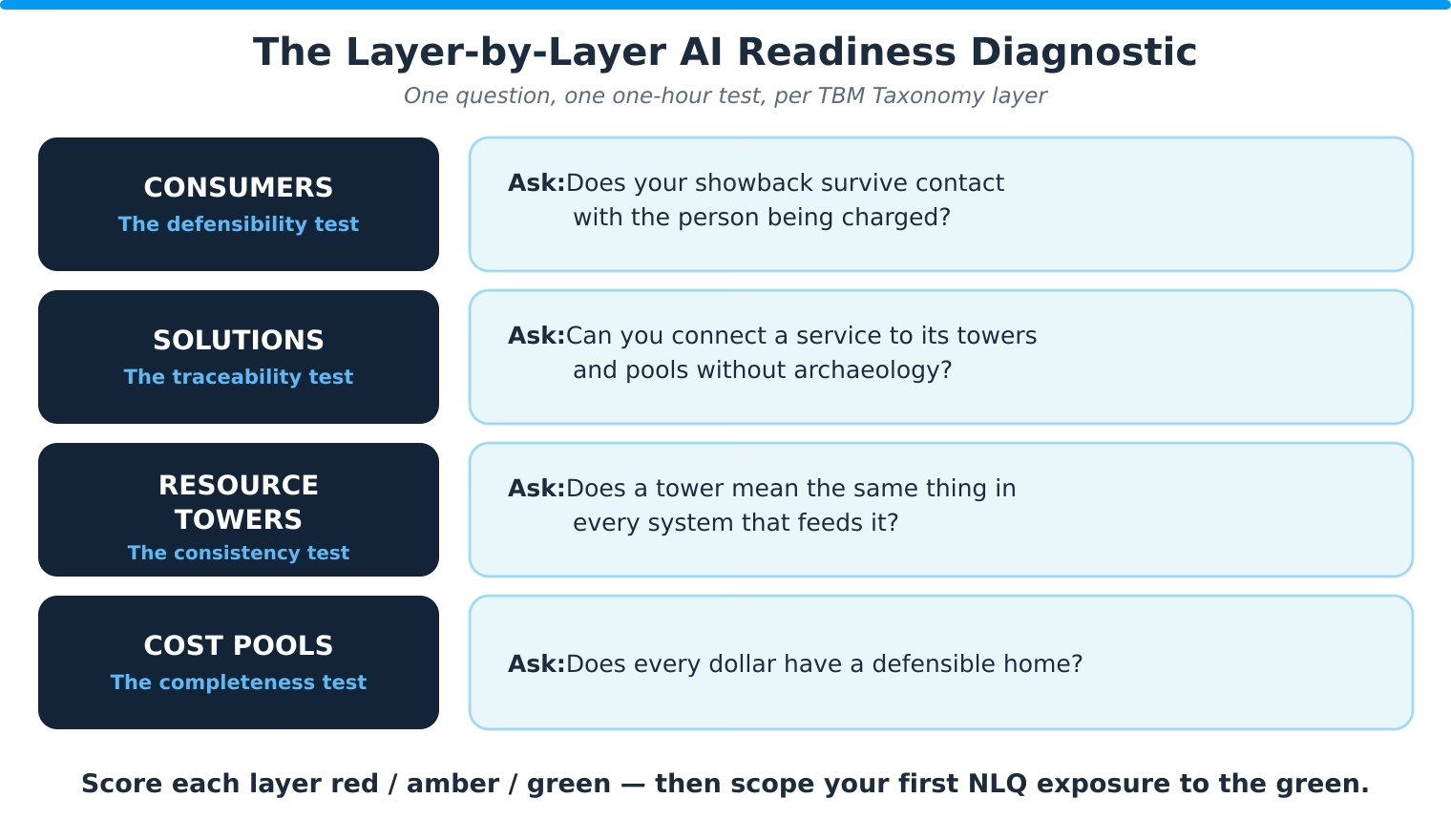
What you do with the map matters more than the map itself. Score each layer red, amber, or green, then scope your first NLQ exposure to the green. Not because the rest of the model is unusable, but because trust in an AI interface is built or destroyed at first contact, and you control where first contact happens.
The full diagnostic, with scoring guidance for each layer, is developed in depth in our AI Readiness Assessment whitepaper. Run the four tests first. Most programs are surprised by which layer fails, and relieved by how bounded the fix turns out to be.
The whitepaper behind this blog
For a deeper look at the validation framework and a step-by-step pre-launch checklist, read the full whitepaper: The AI Readiness Assessment for TBM Programs.
Frequently Asked Questions
Each test is designed to run in about an hour with data you already have access to; the constraint is usually system access, not analysis time. Budget one day for all four layers, including writing up the map.
There is no universal threshold, but low single digits is normal operational drift, while a double-digit gap between CMDB, billing, and ITAM counts means unit costs built on that tower cannot be defended. The trend matters as much as the number; a spread that grows each month indicates no standing reconciliation exists.
No. Scope the pilot to green layers and the specific towers and pools business users actually query, and remediate amber layers in parallel. Sequencing exposure is faster and safer than sequencing cleanup.
Related Resources
Continue reading on connected topics from FogLifter®.