
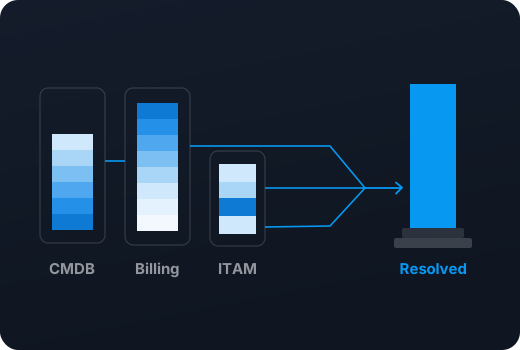
The CMDB lists 340 active storage volumes. The provider's billing feed is charging for 362. The ITAM platform tracks 351 units on the same storage platform. Nobody is lying; each system is faithfully reporting what it was built to track. But the Storage tower can only be built from one number, and how an organization gets to that number, quietly or on the record, determines whether the tower can be trusted next quarter too. What follows is the resolution as it plays out in a Validation View, step by step.
Surface, Assign, Investigate, Resolve, Persist
- Surfacing. The discrepancy is detected when the feeds land, not when a budget review stumbles over it months later. Because reconciliation runs upstream of the TBM model, the mismatched counts never reach the Storage tower, an allocation, or a query interface while they still disagree.
- Assignment. The discrepancy routes to the people who actually own the answer: the storage administrator responsible for the CMDB records, and the billing owner on the provider side. That cross-boundary pairing is the point. The Validation View is built as a shared forum between parties who normally reconcile by email: a managed service provider and its customer, IT and a business unit, or a system of record and a ServiceNow CMDB.
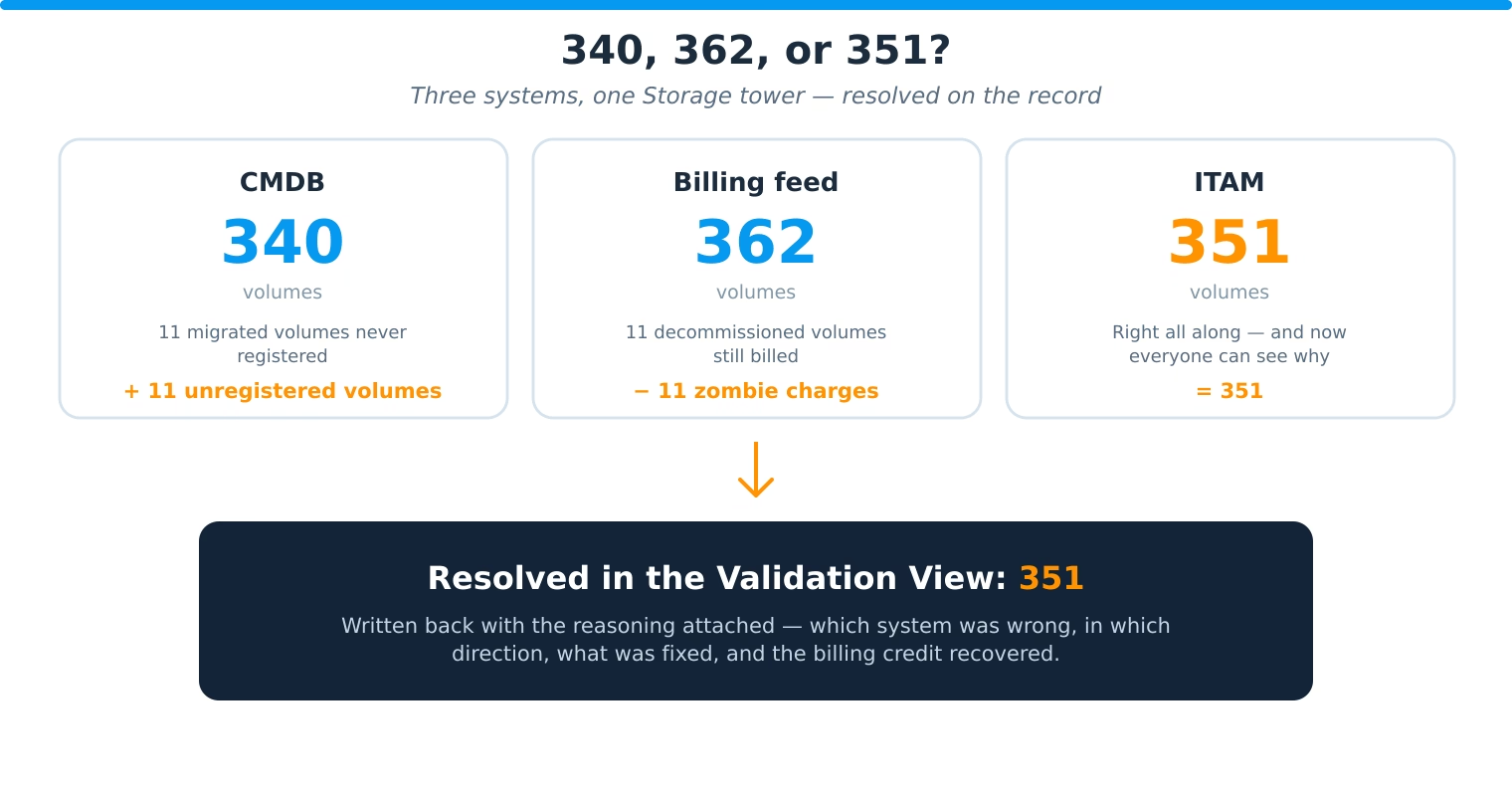
- Investigation, on the record. The trail is straightforward once both owners look at the same data. Eleven volumes were decommissioned last quarter but never removed from billing; the provider owes a credit. Eleven different volumes were provisioned during a migration and never registered in the CMDB; records get created. Which means the ITAM figure, 351, was right all along, and now everyone can see why: 362 billed minus 11 zombie charges is 351, and 340 recorded plus 11 unregistered volumes is 351.
- Resolution. The corrected count is written back with the reasoning attached: which system was wrong, in which direction, what was fixed, and what the fix recovered, in this case a billing credit worth pursuing. Contrast the old alternative: an analyst overrides one number in a spreadsheet because experience says to trust ITAM this time. That fix works exactly once, and it evaporates when the analyst is on leave, changes roles, or simply forgets which number they corrected and why.
- Persistence. Next quarter the same drift pattern will recur, because decommissioning and provisioning never pause. The difference is that the workflow is now standing: new discrepancies surface, route, and resolve against a documented history instead of starting from zero. One enterprise environment measured the effect on storage reporting alone at more than 100 man-hours per month recovered: hours previously spent reconstructing, by hand, context the Validation View now simply keeps.
The whitepaper behind this blog
For a deeper look at the validation framework and a step-by-step pre-launch checklist, read the full whitepaper: The AI Readiness Assessment for TBM Programs.
Frequently Asked Questions
The resolution is durable and shared. A spreadsheet fix lives in one analyst's file and memory; a Validation View resolution records which system was wrong, why, and what was corrected, visible to both data owners and to whoever asks the same question next quarter.
The data owners on each side of the specific discrepancy: a CMDB steward and a billing administrator, an MSP and its client, IT and a business unit. Routing to owners, rather than to a central analyst, is what makes resolutions both accurate and fast.
No. The same surface, assign, investigate, resolve pattern applies to any tower or cost pool where multiple systems of record feed the same number: server counts, software licenses, invoices against contracts, and CMDB-to-billing mismatches generally.
Related Resources
Continue reading on connected topics from FogLifter®.