
Data inputs
Infrastructure, cloud, apps, networks, billing, CMDB, ticketing, and supporting operational systems.
The platform ingests enterprise records, normalizes and reconciles them, models relationships through its ontology, and then delivers dashboards, workflows, exports, and NLQ on top of the same trusted foundation.
FogLifter® follows a clear sequence — from ingestion through normalization, correlation, and delivery — so every answer your teams get is traceable back to a validated source.
Infrastructure, cloud, apps, networks, billing, CMDB, ticketing, and supporting operational systems.
Records are mapped, cleaned, reconciled, refreshed, and checked for confidence gaps.
FogLifter links costs, assets, services, owners, policy, and performance signals together.
Users move from evidence to action through role-specific views, review paths, and exports.
Natural-language questions operate on the same modeled, validated data instead of a disconnected search index.
Surface mismatches across systems. Track, investigate, and resolve them before they become billing disputes or audit findings.
Most platforms connect data and leave interpretation to the user. FogLifter's ontology understands how IT records relate to each other — so costs tie to services, services tie to assets, and assets tie to owners — giving every answer a defensible chain of evidence behind it.
FogLifter’s ontology captures how enterprise IT data behaves in the real world. It helps the platform understand what a service is, what assets support it, who owns it, what it costs, which provider touches it, and what policy or SLA expectations apply.
Each section of the platform has its own page — for evaluators who want to go deeper on analytics, integrations, security, or AI before the next conversation.
See how FogLifter supports cost, asset, service, and risk analytics.
Review the types of systems FogLifter connects to and why that matters.
Understand the governance and control story for enterprise use.
See how natural-language questions stay grounded in the platform’s model.
From fragmented enterprise data to trusted operational and financial insight — connect inputs, validate records, correlate cost and service relationships, and deliver role-specific dashboards and workflows.
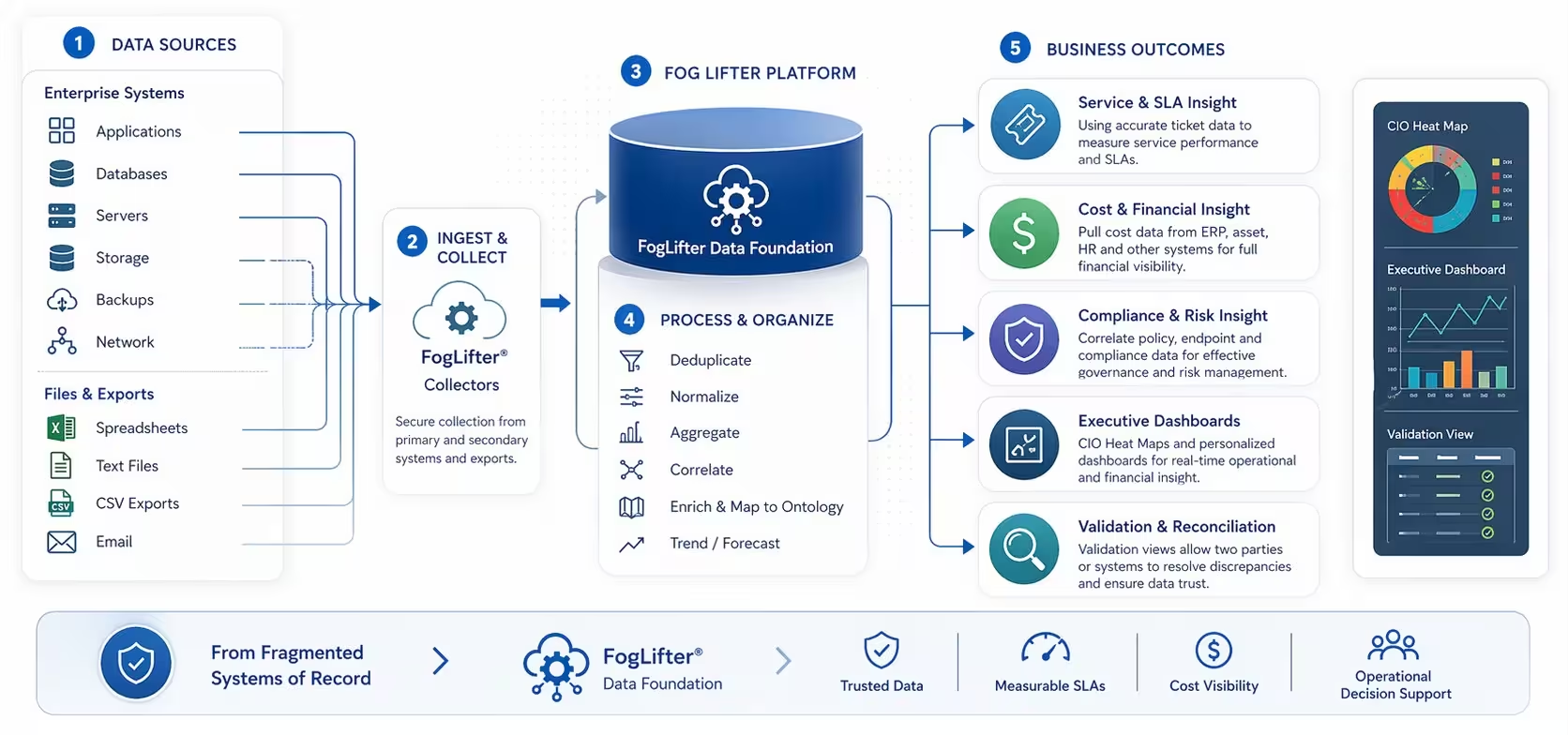
FogLifter helps internal teams gain a unified view of assets, costs, and service performance, while outsourced environments benefit from independent validation of inventory, billing, and SLA outcomes. Either party in an outsource relationship can contract for FogLifter separately — and both see the same trusted data.
Learn more about Analytics